Staying Hydrated While Exercising in Temperatures Above 30 degrees
It’s going to be hot in the Netherlands over the next few days. We’re expecting temperatures ranging from 35°C to as high as 38°C this week. That means your body loses much more fluid than usual while exercising. Especially if you’re going for a run, a bike ride, a trail run, or doing a HYROX workout, it’s wise to pay extra attention to your fluid intake.
In hot conditions, your body has to work harder to cool down. This causes you to sweat more, and you lose not only fluids but also important electrolytes like sodium. By taking this into account beforehand, you can start your workout or competition better prepared.
Why is staying hydrated so important?
When exercising, you cool down by sweating. On hot days, an athlete can easily lose 1 to 1.5 liters of fluid per hour. For some athletes, this can be even more.
If you lose too much fluid, it can affect how you feel during your workout. That’s why it’s wise not to wait until you’re thirsty to drink, but to pay attention to your fluid intake beforehand.
Start even before your workout
Don't start your workout when you're already dehydrated.
A practical approach:
- Drink plenty of water throughout the day.
- Drink about 500 ml of fluid in the hour before your workout.
- If you’re exercising for longer or at a higher intensity, you may want to choose an isotonic sports drink.
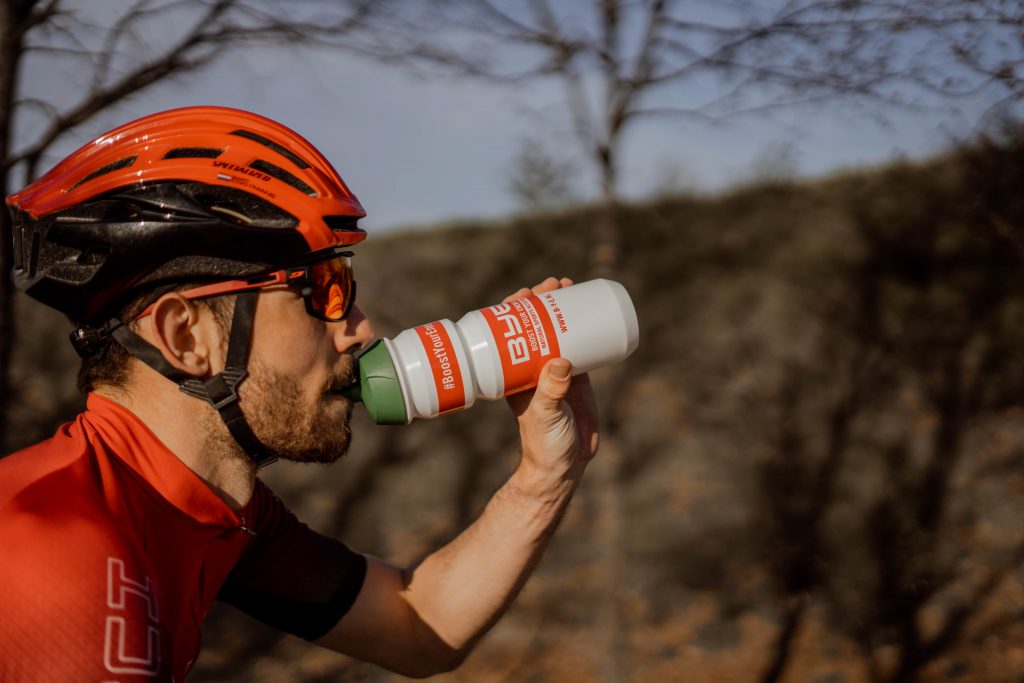
A handy tip is to have a few resealable bags of isotonic sports drink ready in advance. That way, you can easily take them with you to your workout or competition and refill your water bottle along the way whenever needed.
How much should you drink while exercising?
In hot conditions, these are good guidelines:
| Exercise | Advice |
|---|---|
| Up to 1 hour | 500–750 ml per hour |
| 1 to 2 hours | 750–1,000 ml per hour |
| More than 2 hours or very hot | 1,000–1,250 ml per hour |
Everyone sweats differently, so use this as a starting point. For some athletes, the lower end of this guideline is sufficient, while others need more.
Why choose an isotonic sports drink?
When you sweat a lot, you lose not only fluids but also electrolytes such as sodium. In addition, you use carbohydrates as fuel while exercising.
An isotonic sports drink can therefore be helpful during workouts in hot weather because it:
✔ Fluids provide
✔ Contains carbohydrates for energy
✔ Replenishes electrolytes
In hot weather, it’s often difficult to stay properly hydrated. An isotonic sports drink can be a practical solution, since it helps you replenish several things at once from a single water bottle.
Track your own sweat loss
Do you want to know how much fluid you lose?
- Weigh yourself right before your workout.
- Weigh yourself immediately after your workout.
- Adjust this amount as needed to account for what you’ve already drunk during your workout.
For example, if you lose 1 kg of body weight during a workout, you’ve lost about 1 liter of fluid.
By measuring this a few times in hot conditions, you’ll get a good idea of your personal fluid needs.
How much should you replenish afterward?
After exercising, it’s a good idea to drink more than you’ve lost.
A commonly used guideline is:
Drink about 1.5 liters of fluid for every kilogram of body weight you’ve lost.
Examples:
- For every 1 kg lost, replenish about 1.5 liters
- 1.5 kg lost = replenish about 2.25 liters
- 2 kg lost = replenish about 3 liters
Spread this out over the hours following your workout and combine it with a regular meal.
Extra tips for hot training days
At temperatures ranging from 35 to 38 degrees, your body needs extra attention when it comes to fluid intake.
- Start drinking an hour before your workout.
- Drink about 750 to 1,250 ml per hour while exercising, depending on the conditions.
- Use an isotonic sports drink to replenish fluids, carbohydrates, and electrolytes.
- Weigh yourself before and after workouts to get an idea of your personal fluid loss.
- Afterward, drink about 1.5 liters for every kilogram you’ve lost.
- It’s best to schedule intense workouts early in the morning or later in the evening when temperatures are lower.
- Adjust your pace when conditions call for it.
Summary
Hot conditions require proper preparation. By drinking enough beforehand, replenishing fluids regularly during exercise, and restoring your fluid loss afterward, you help your body cope better with workouts on hot days.
Get your water bottles ready ahead of time, pack a few resealable bags with isotonic sports drink, and head out well-prepared. That way, you can continue to enjoy your workouts to the fullest even during this hot week.